

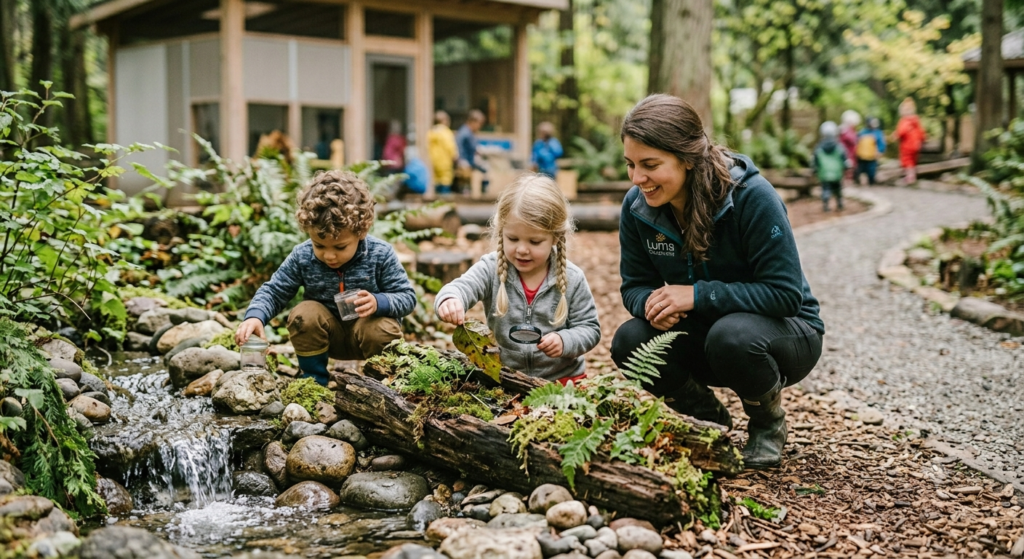
For many families seeking quality education, Vancouver preschools are increasingly adopting nature-based learning philosophies. This approach moves beyond traditional classrooms, utilizing the expansive local parks, coastal areas, and urban green spaces as primary teaching environments. But why are so many educators and parents prioritizing this method? The shift isn’t just about fresh air; it offers foundational advantages for child development. Here are six core benefits that illustrate why outdoor learning is reshaping early childhood education.
1. Robust Physical Development and Motor Skills
When young children trade desk chairs for irregular terrain, they are constantly challenged to move in complex ways. Negotiating a fallen log, balanced on uneven ground, or navigating rocky paths requires a much wider range of physical exertion than indoor play. This organic exercise dramatically improves balance, stamina, and coordination. Research indicates that children in nature-based programs develop stronger gross and fine motor skills simply by interacting with natural, unpredictable materials.
2. Enhanced Scientific Inquiry and Critical Thinking
The natural world is an inherently complex scientific laboratory. Nature-based learning transforms children from passive observers into active researchers. A simple observation of a caterpillar spinning a cocoon or a stream diverting after rainfall sparks curiosity and a cascade of critical questions. Educators in Vancouver preschools facilitate these moments, encouraging children to predict, test hypotheses, and analyze systems—building a foundation for lifetime scientific inquiry.
3. Fostering Social Co-operation and Communication
The outdoor environment frequently presents challenges that require group problem-solving. Building a small dam across a trickling creek or carrying a large branch requires collaboration, negotiation, and clear communication. Unlike static indoor toys, natural objects have infinite uses, and children must constantly share ideas and resources to achieve a common goal. This dynamic interplay significantly strengthens their social intelligence and cooperative abilities.
4. Cultivating Deep Emotional Intelligence and Resilience
Nature is not a sterile environment; it is dynamic and, at times, difficult. Experiencing the change of seasons, handling minor frustrations like tricky climbing spots, or seeing life cycles firsthand cultivates powerful emotional intelligence. Children learn to manage risks and build genuine resilience when they realize that they can overcome obstacles. This self-regulation is a crucial lifelong emotional skill, and the varied textures and environments of the outdoors offer unique opportunities for sensory regulation.
5. Increased Focus and Stress Reduction
A growing body of research, including studies relevant to urban planning, highlights the calming effect of natural environments. The concept of ‘attention restoration theory’ suggests that natural settings (the rich sensory input of local BC foliage, the sound of water) help children recover from mental fatigue, thereby improving their concentration and focus. Spending regular time outdoors significantly reduces stress levels and symptoms of anxiety, leaving children more receptive to learning when they return to any environment.
6. Development of Environmental Stewardship from an Early Age
Perhaps the most impactful long-term benefit is the authentic connection children form with their local environment. By spending their formative years interacting deeply with BC ecosystems, children develop a sense of ownership, empathy, and responsibility toward the natural world. They don’t just learn about conservation in the abstract; they grow to love the specific trees, creatures, and parks they explore every day, ensuring a future generation committed to sustainable living.
Conclusion
Embracing nature-based learning within Vancouver preschools is a multifaceted investment in a child’s future. The physical challenge, intellectual stimulation, and emotional grounding provided by the outdoors create a unique learning foundation. As education in British Columbia continues to innovate, prioritizing deep, authentic experiences in nature ensures that the next generation is not only healthier and more resilient but also genuinely connected to the planet they will inherit.
Leave a Reply